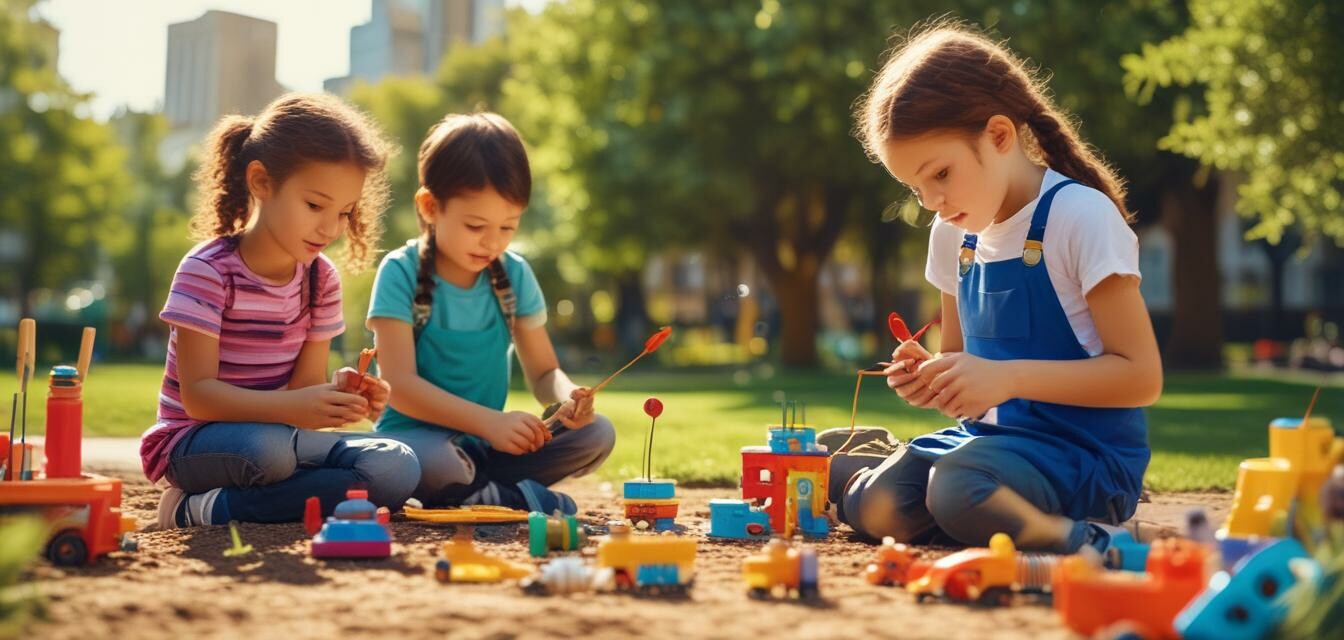
The Connection Between Outdoor Play and STEM Learning
Key Takeaways
- Outdoor play enhances engagement in STEM learning.
- Innovative activities like building structures and experimenting with nature promote scientific thinking.
- Hands-on experiences in play lead to better understanding of STEM concepts.
- Parents and educators are discovering the value of outdoor play for children's development.
- Encouraging creativity through outdoor exploration helps in problem-solving skills.
In recent years, outdoor play has gained attention not just as a way for kids to enjoy themselves, but also as an effective platform for teaching STEM (Science, Technology, Engineering, and Mathematics) concepts. With the world becoming increasingly reliant on technology and scientific advancements, it’s essential to equip the next generation with the skills and knowledge they'll need. Through hands-on experiences, children can develop valuable skills while having fun outside. Let's explore how outdoor play is transforming into an innovative educational vehicle.
Why Outdoor Play Matters for STEM Learning
Outdoor play allows children to interact with their environment and provides opportunities for exploration, discovery, and learning. It’s a hands-on experience that enhances their cognitive abilities and critical thinking skills. Here are a few reasons outdoor play is essential for STEM education:
- Engagement: Playing outside captivates children's interest and keeps them involved.
- Real-world applications: Kids can directly observe and engage with various scientific principles, such as physics and biology, during play.
- Encouragement of innovation: Outdoor environments stimulate creativity, allowing children to think outside the box and develop problem-solving skills.
- Social interaction: Collaborative play helps children learn from their peers, fostering teamwork and communication skills.
Innovative Outdoor Activities for STEM Learning
Incorporating STEM learning into outdoor activities not only enhances knowledge but also keeps children entertained and physically active. Below are some innovative activities that can be easily integrated into outdoor play:
| Activity | STEM Concepts Involved | Benefits |
|---|---|---|
| Building Structures | Engineering, Mathematics | Enhances spatial awareness, creativity, and critical thinking. |
| Nature Scavenger Hunts | Biology, Environmental Science | Encourages observation skills and knowledge of ecosystems. |
| Water Play Stations | Physics, Engineering | Demonstrates principles of flow, buoyancy, and construction. |
| Outdoor Coding Games | Technology, Problem Solving | Develops logical thinking and coding skills through play. |
| Garden Exploration | Biology, Chemistry | Provides hands-on experience with plant life and ecosystems. |
Popular Trends in Outdoor Play for STEM Education
The trends in outdoor play have shifted towards incorporating educational aspects that teach children essential STEM concepts. Some of the popular trends include:
- Eco-friendly toys: Parents are increasingly looking for sustainable play options that also educate.
- Technology integration: The rise of interactive outdoor games that utilize mobile apps to enhance playtime.
- Community-based initiatives: Local parks and educational institutions are partnering to offer outdoor learning experiences.
- Multisensory experiences: Activities designed to engage multiple senses contribute to deeper learning and retention.
Involving Parents and Educators
To maximize the benefits of outdoor play for STEM learning, it is crucial for parents and educators to collaborate. Here are some steps to involve parents and educators in promoting outdoor play:
- Organize community events focused on outdoor activities with a STEM emphasis.
- Share resources and ideas through workshops, newsletters, or social media.
- Encourage regular outdoor play as part of the childhood routine.
- Promote safety and supervision during outdoor activities.
Conclusion
Outdoor play is more than just a way for children to unwind; it is a robust platform for teaching vital STEM concepts. By providing hands-on and engaging activities, children can learn while having fun and gain lifelong skills that are crucial in our technology-driven world. Embracing the connection between outdoor play and STEM learning can lead to more well-rounded, creative, and problem-solving children who are ready for the challenges of tomorrow.
Pros
- Enhances engagement and interest in STEM subjects.
- Encourages physical activity and social interaction.
- Provides real-world applications of STEM concepts.
- Fosters creativity and critical thinking skills.
Cons
- Requires planning and supervision.
- Some outdoor activities may be limited by weather conditions.
- Access to safe outdoor spaces may vary by location.
For more insights on how outdoor activities benefit your child's overall development, check our safety tips blog and explore our outdoor games category for great playing options that engage both mind and body!