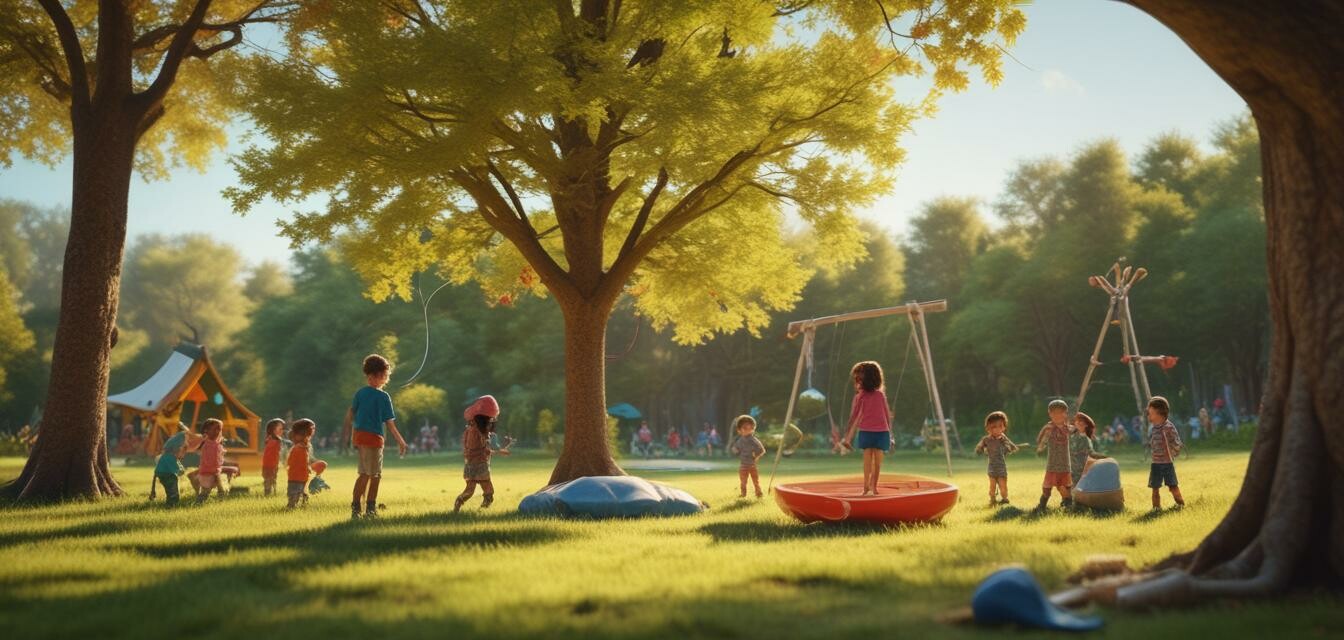
Outdoor Play and Mental Health: A Focus on Wellbeing
Key Takeaways
- Outdoor play enhances children's mental health and emotional wellbeing.
- Unstructured playtime promotes creativity and problem-solving skills.
- Connecting with nature can improve mood and reduce anxiety.
- Parents should prioritize outdoor activities that support mental health.
- Encouraging physical activity through outdoor games fosters social connections.
In recent years, there has been a growing recognition of the essential role outdoor play plays in children's mental health and emotional wellbeing. As we navigate increasingly digital lives, the importance of unstructured playtime outdoors stands out as a key factor in promoting healthy development.
The benefits of outdoor play for mental health
Numerous studies indicate that engaging in outdoor activities can significantly impact children’s mental health positively. Here are some notable benefits:
| Benefit | Description |
|---|---|
| Improved mood | Outdoor play helps children release pent-up energy, leading to reduced stress and improved mood. |
| Social skills | Playing outdoors encourages children to interact with peers, enhancing their social abilities. |
| Enhanced creativity | Unstructured play allows for imaginative scenarios, fostering a child’s creativity. |
| Reduced anxiety | Spending time in nature is linked to lower feelings of anxiety and depression. |
Unstructured playtime: A path to emotional wellbeing
One of the most significant aspects of outdoor play is the concept of unstructured playtime. Unlike organized sports or structured activities, unstructured play provides children with the freedom to explore and engage with their environment. Here’s why it matters:
- Encourages exploration: Children can investigate their surroundings and interact with various elements of nature.
- Builds problem-solving skills: Without a set agenda, kids learn to assess situations and come up with solutions independently.
- Fosters resilience: Facing challenges during play helps children develop coping mechanisms and build inner strength.
Tips for parents to encourage outdoor play
Beginner Section
- Make outdoor play easy to access by creating a safe play area in your backyard.
- Plan weekly trips to parks or nature reserves to encourage unstructured play.
- Introduce simple outdoor games that can be played with minimal equipment.
- Encourage your children to invite friends over for playdates in nature.
- Limit screen time and set designated outdoor playtimes each week.
The role of nature in promoting mental health
Nature not only provides a backdrop for play, but it also serves as a natural stress reliever. Many parents report that children who spend more time outdoors are generally happier and more relaxed. Here’s how nature enhances mental health:
- Connection to nature: Children who play outside develop a deeper connection to their environment.
- Physical health: Active play in natural settings often leads to better physical health, which is closely linked to improved mental health.
- Mindfulness: Being outdoors often encourages mindfulness, allowing kids to be present in the moment.
Conclusion
As awareness grows about the significance of mental health, it becomes increasingly clear that outdoor play is a vital component of emotional wellbeing for children. Parents are encouraged to create opportunities for unstructured play, so kids can enjoy the numerous benefits of outdoor activities and naturally improve their mental health.
Further Reading
For more insights on outdoor play and its benefits, check out our articles on Outdoor Games and Buying Guides. You can also explore Climbing Structures for enhancing children's physical activity.
Pros
- Supports mental health
- Enhances creativity
- Promotes physical fitness
- Encourages social interaction
- Builds problem-solving skills
Cons
- Possible safety concerns
- Weather-dependent activities
- Need for adult supervision